Burnout & exhaustion
When nothing recharges any more
Ayurvedic support in Zurich for people who have been living off their reserves for months.
Most people who come here for this reason begin by saying: “I’m fine, really.” And then describe a state in which nothing has genuinely restored them for six months.
I’m not a doctor and I don’t treat diagnoses. What I offer is something else: a place where the body has to perform nothing for ninety minutes, and an ayurvedic assessment that shows where your system is currently out of balance.
For many people that is the first point in a long time where something starts moving in a different direction. For some it is not enough — and I say so when that is the case.
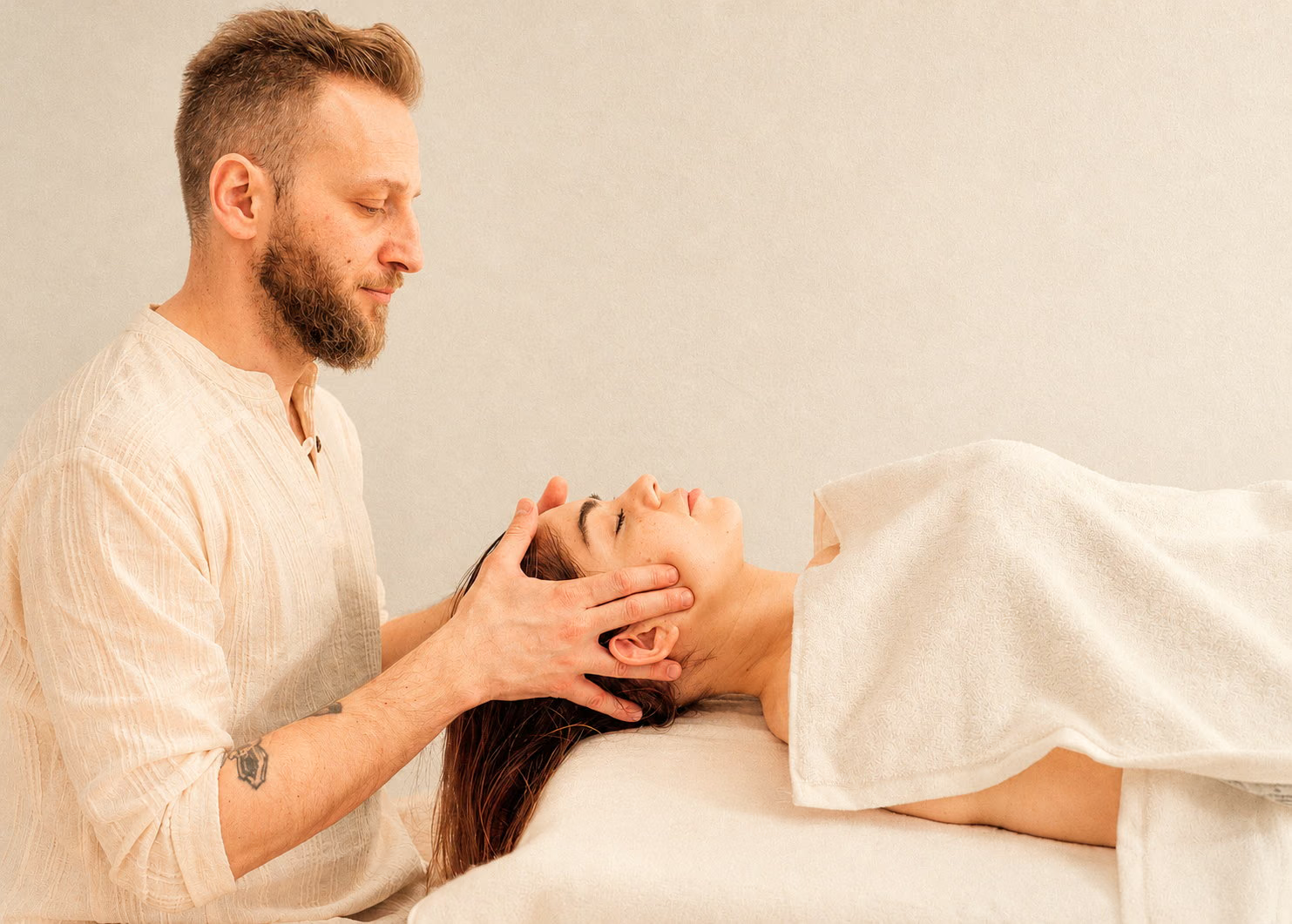
Does this sound familiar?
What people describe to me
No questionnaire, no self-diagnosis. Just sentences I hear in this room again and again.
“I function.”
The day runs, the work gets done. But it stops feeling like living and starts feeling like processing.
“I can’t come down.”
Even when nothing is pending, a baseline tension stays. Rest feels restless.
“I’m always tired and still sleep badly.”
Exhausted and wired at the same time — a state that is hard to explain if you have not been in it.
“Small things knock me over.”
A crowded tram, an ambiguous message. The reserve that used to absorb that is gone.
“My body is speaking up.”
Tight neck, jaw, stomach, digestion. The body carries what the mind will not put down.
“Holidays help for two days.”
Then the old state is back, often before the flight home.
Ayurveda for burnout: how I read it
Ayurveda has no diagnosis called burnout. It describes states instead: too much movement in the system, too little that nourishes, a digestive fire burning irregularly, and a nervous system that has been on alert for a long time.
Traditionally, this picture is worked with using three things above all: warmth, oil and rhythm. Not because that sounds exotic, but because it is the exact opposite of what sustained stress does in a body — dry, cold, erratic, unpredictable.
This is not a medical explanation and does not want to be one. It is a second model, and it often shows something where the usual questions have already been worked through.
What I actually do
Four things. No more, because in this state nobody implements more.
Time with no demands
A treatment of 60 or 90 minutes in which nothing is expected of you. For many people that is the least familiar part.
Warmth and oil
Abhyanga or herbal poultices, slow and even. Most clients describe a feeling of deep quiet afterwards.
An honest look at your day
When you eat, when you stop working, when the body gets recovery. That becomes two or three realistic changes.
Repetition
A single treatment is a good afternoon. What shifts something is a rhythm held over several weeks.
Common questions
What people most want to know before a first appointment.
Can Ayurveda cure burnout?
No — and anyone who claims otherwise should not be your first port of call. Burnout is a medical diagnosis and belongs in medical or psychotherapeutic hands. What ayurvedic treatments can do: contribute to relaxation, bring a reliable rhythm into the week, and create a place where the body has to perform nothing. Many people use that alongside their medical treatment.
I am in psychotherapy. Does this fit alongside it?
Yes, and that is the setting I most like working in. Tell me at the first consultation what is currently in place. I will never ask you to change a medical treatment or stop medication — that is entirely your treating professional’s decision.
How many appointments will I need?
Every seven to ten days at the start, then at steadily longer intervals. A single treatment feels good but rarely shifts a pattern that has been running for months. How many it turns out to be depends on your situation and your goal — and the goal is that eventually you only need me when something changes, at the turn of a season for instance.
I have no energy for another project. Is this demanding?
No, and that is deliberate. You get two or three small changes, not a twenty-point plan. Anything that requires more discipline than you currently have will not work in this state anyway.
Does insurance contribute towards this kind of support?
I am registered with the EMR, so many supplementary insurance policies for complementary medicine contribute part of the cost. Compulsory basic insurance covers none of it. What applies in your case is decided solely by your insurer — one phone call before the first appointment settles it.
The treatments I usually work with when someone is exhausted
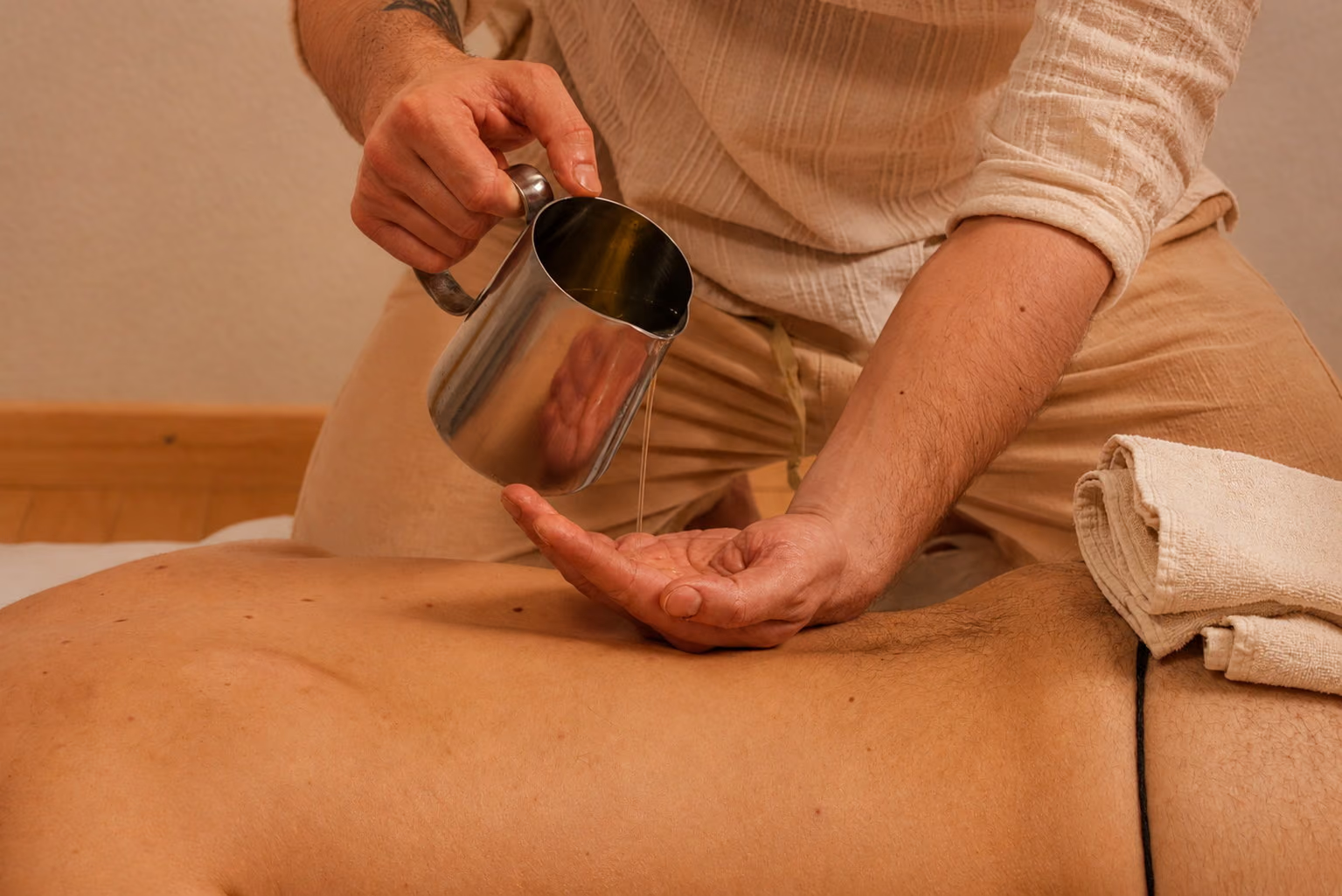
Abhyanga
Full-body oil massage
Warm herbal oil, long unhurried strokes. The treatment where the body lets go first.
Read more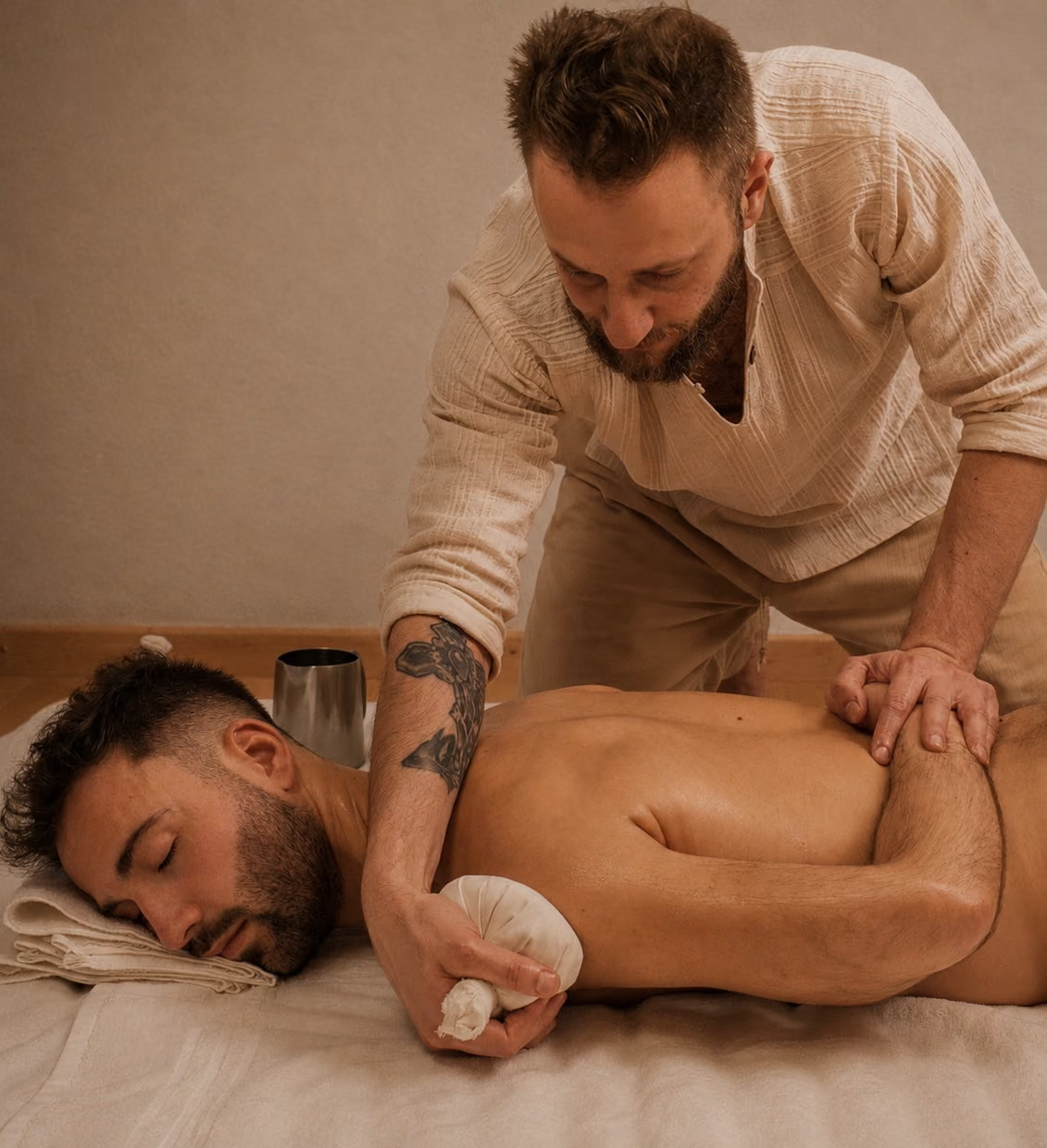
Pinda Sweda
Warm herbal poultices
Warm herbal poultices, dabbed and rolled. For tension that can no longer be pressed away.
Read more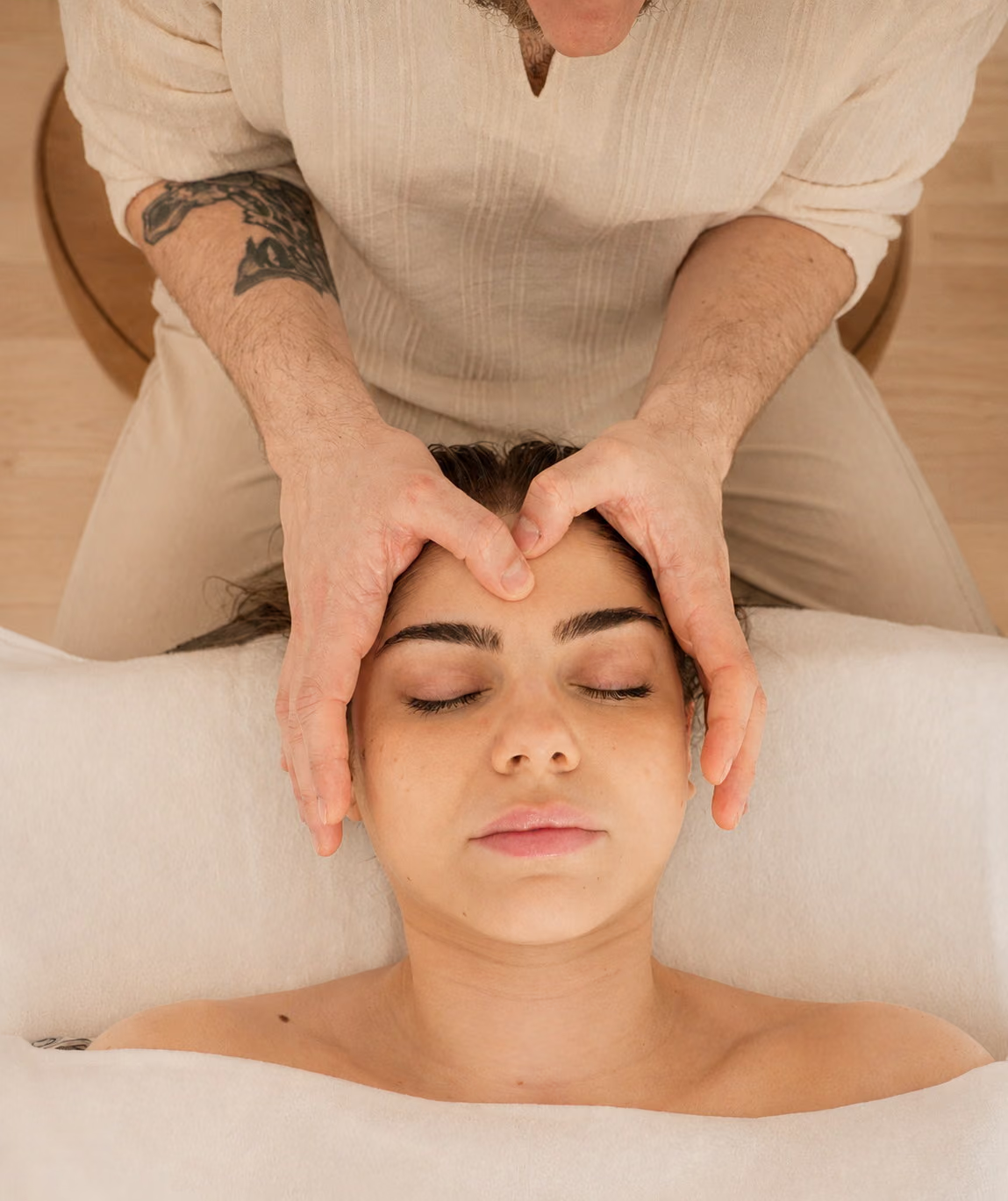
Marma therapy
Work on the vital points
Very light pressure on single points. The quietest treatment I offer.
Read more
The first step
First consultation, 90 minutes.
We start by looking at what is actually going on. If a medical or psychotherapeutic assessment is the next step, I will tell you so.